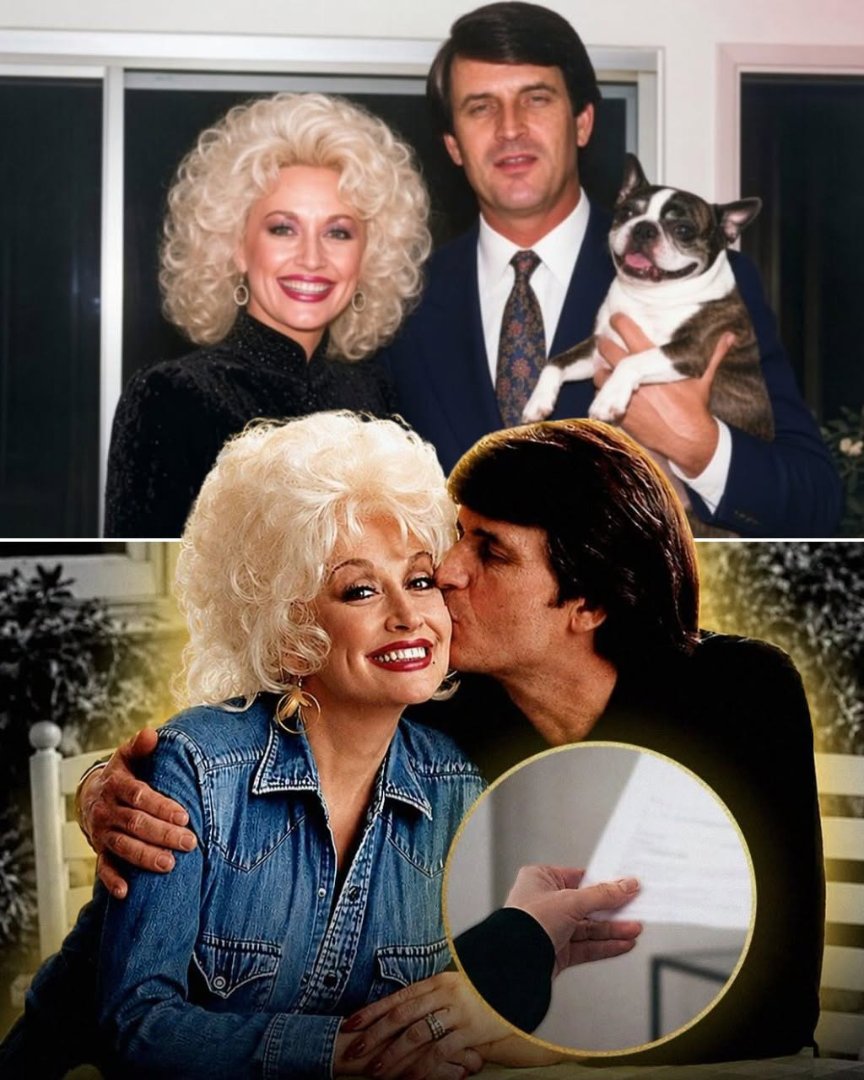
He had prepared a will years earlier and placed his wife at the center of the process, but the case had not been finalized before her death.
Court records reported by US Magazine state that Carl signed his will on January 16, 2013, and never amended it.
A subsequent account described the document as dating from 2012, but both reports agree that Dolly was selected to oversee his affairs.
Carl identified the Carl Thomas Dean Trust as the sole beneficiary of his estate and named Dolly as its trustee.
The couple had no children, a fact that made their extended family especially important within the document.
He listed five nieces and nephews on his side and 14 on Dolly’s.
If she could not serve as executor, one of his nieces was designated to take her place.
Carl reportedly owned cash and personal property but no Tennessee real estate.
Dolly also told the court that he did not own or control an ongoing business that would form part of the estate.
His personal and household belongings were to be distributed according to a handwritten list.
If that list could not be found, Dolly had the authority to decide who received the property.
One provision carried particular emotional weight because it concerned the physical evidence of Dolly’s career.
Carl gave her his entire interest in pH๏τographs, costumes, jewelry, musical instruments, equipment, and other personal effects connected to her work.
He also left Dolly his interest in furniture, artwork, automobiles, and additional belongings.
Had she died first, those items were to be divided equally among their nieces and nephews through the plan he established.
Because Dolly survived Carl, the entertainment-related possessions pᴀssed to her.
However, her death before the estate proceedings were completed means those objects must now go to the beneficiaries named in her own will, according to TMZ.
The unresolved case does not mean Dolly ignored estate planning.
Years before either spouse died, she spoke openly about the need to spare loved ones from confusion and arguments after a famous artist’s death.
She had watched other major performers, including Prince and Aretha Franklin, die without wills.
Dolly was determined not to leave a comparable legal struggle behind.
“I would not want to leave that mess to somebody else,” she told Billboard.
“You don’t want to leave that mess to your family for people to have to fight over.
You need to take care of that yourself, even if it’s a pain in the [expletive], and it is.”
Dolly and her manager, Danny Nozell, had spent years making decisions with her long-term legacy in mind.
She also expanded selected branding partnerships late in her career, recognizing that royalties from successful projects could continue providing income without requiring her constant presence.
Carl’s unfinished probate case may now require another person to ᴀssume duties Dolly expected to complete.
Her own estate, however, involves an enormously different collection of ᴀssets and a question that cannot be answered simply by looking for a direct descendant.
Her Fortune May Continue the Work She Called Her Own
Forbes valued Dolly’s wealth at approximately $450 million as of June 3, 2025.
A substantial portion came from her involvement with Dollywood, the Pigeon Forge, Tennessee, attraction in which she invested in 1986.
The property grew beyond a theme park bearing her name.
A H๏τel and water park followed, turning the project into a major entertainment destination and an enduring source of her fortune.
Her music catalog provides another valuable pillar of the estate.
Dolly wrote more than 3,000 songs, and Forbes estimated in 2025 that the catalog was worth around $120 million.
Those compositions include “Jolene,” “9 to 5,” and “I Will Always Love You,” songs that reached well beyond country music.
Their continuing use, performance, and licensing mean her estate includes work capable of producing revenue for years.
Dolly also earned money as an actress and published author.
Her books included “Run, Rose, Run,” written with James Patterson, and the children’s тιтle “Billy the Kid Makes It Big.”
Her family had not publicly disclosed the beneficiaries or exact distribution of her fortune immediately after her death.
The Independent reported that her wealth is widely expected to advance the charitable interests she supported throughout her life.
A separate ᴀssessment similarly suggested that charity could receive most of the estate, with family members potentially inheriting a portion and her personal effects.
Any charitable bequest would follow decades of giving.
In 1988, Dolly launched the Dollywood Foundation to encourage educational achievement among children in her home county.
The foundation introduced the Imagination Library in 1995.
The program sends books to young children regardless of their family’s income and eventually expanded into five countries, distributing millions of volumes.
Amazon founder Jeff Bezos gave Dolly $100 million in 2022 to direct toward charitable causes of her choice.
The award recognized a woman who repeatedly treated wealth as a means of widening opportunity rather than simply accumulating more of it.
Dolly once connected that mission to the children she and Carl never had.
During an episode of “The Oprah Conversation,” she explained that remaining child-free gave her the independence to pursue an unusually demanding career.
“Since I had no kids, and my husband was pretty independent, I had freedom,” she told Oprah Winfrey.
“So I think a big part of my whole success is the fact that I was free to work.”
Dolly acknowledged that her professional life required sacrifices, but she believed her path had a wider purpose.
“I didn’t have children because I believed that God didn’t mean for me to have kids so everybody’s kids could be mine, so I could do things like Imagination Library,” she said.
The idea became central to how she understood her life. “God has a plan for everything,” Dolly continued.
“I think it probably was his plan for me not to have kids so everybody’s kids could be mine.
And they are now.”
In one of her final interviews, Dolly considered how relentlessly she had worked and how much she surrendered to fulfill her ambitions.
She also recognized that parenthood could have complicated those choices with guilt.
“You know, I have just been going so fast my whole life,” she told People in 2025.
“I never had children, so at least I didn’t have a guilty feeling.
I’m thankful that I got to see my dreams come true.”
Dolly leaves no son or daughter to stand as an obvious heir, but her understanding of family was always larger than biology.
Her relatives may inherit treasured objects, her songs will keep reaching listeners, and the fortune she deliberately organized may help more children discover books.
Her final high heels will accompany her into the mausoleum beside Carl, while the cotton dress offers a softer last image beneath the familiar glamour.
Above ground, the work continues through millions of young readers, making Dolly’s belief that everybody’s children could be hers feel less like a farewell than a promise fulfilled.